
DR Congo, Not Cape Town: Africa’s Luxury Rental Map Just Flipped
Real Estate · Market Report
DR Congo, Not Cape Town: Africa’s Luxury Rental Map Just Flipped
Kinshasa now commands the highest prime rents on the continent. Nairobi sits 11th. Here’s the full ranking, and what it means for East Africa’s own luxury market.
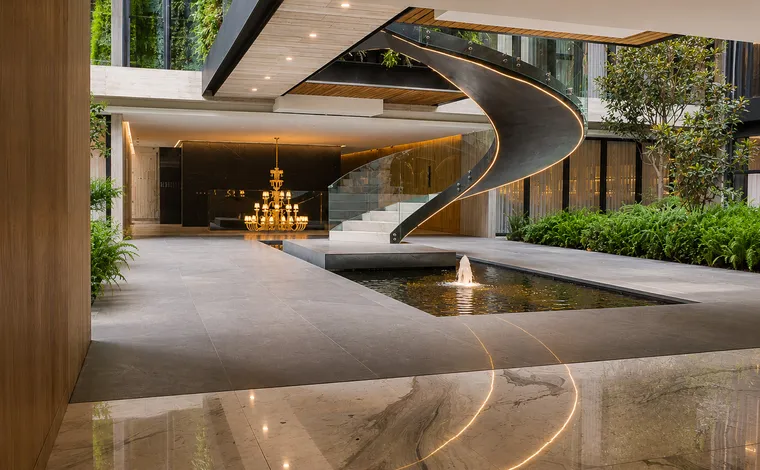
Suggested alt text: “Secure luxury villa compound in Kinshasa’s Gombe district, 2026.”]
For years, the reflexive answer to “where is Africa’s most expensive luxury rental market” has been Cape Town, or perhaps Lagos. According to Knight Frank’s newly released Africa Report 2026/27, the actual answer is Kinshasa. A prime four-bedroom home in the Democratic Republic of Congo now averages roughly $8,000 a month — the highest prime residential rent anywhere on the continent, ahead of Dakar, Abidjan, Accra, and every South African market.
Nairobi, by contrast, sits 11th on Knight Frank’s ranking of 15 markets, with prime four-bedroom rents averaging around $3,100 a month. That is not a small market by any measure — but it is a very different story from the one implied by Nairobi’s reputation as East Africa’s luxury capital.
Why Kinshasa is on top
The DRC’s position at the top isn’t driven by a booming luxury development pipeline — it’s driven by acute scarcity. In Kinshasa, demand from expatriates, diplomatic missions, mining executives, and international NGOs vastly outstrips the available stock of secure, well-managed housing. The most sought-after neighborhoods — Gombe, Ngaliema, and parts of Binza — are defined less by architectural prestige than by reliability: gated compounds with dependable backup power and stable water supply command a premium simply because so few properties can guarantee both.
Senegal tells a similar story from the second spot. Dakar’s prime market, concentrated in Les Almadies, Ngor, Mermoz, and Plateau, has seen rents climb sharply over the past two years as land scarcity and rising construction costs choke off new supply, even as diplomatic and multinational demand keeps growing.
The full ranking
| Rank | Country | City | Prime rent (4BR/month) |
|---|---|---|---|
| 1 | DR Congo | Kinshasa | $8,000 |
| 2 | Senegal | Dakar | $7,900 |
| 3 | Côte d’Ivoire | Abidjan | $5,200 |
| 4 | Morocco | Casablanca / Rabat | $4,500 |
| 5 | South Africa | Cape Town / Johannesburg | $4,500 |
| 6 | Zambia | Lusaka | $4,500 |
| 7 | Cameroon | Yaoundé / Douala | $4,000 |
| 8 | Ethiopia | Addis Ababa | $4,000 |
| 9 | Ghana | Accra | $4,000 |
| 10 | Tanzania | Dar es Salaam | $3,500 |
| 11 | Kenya | Nairobi | $3,100 |
| 12 | Nigeria | Lagos / Abuja | $3,000 |
| 13 | Mauritius | — | $3,000 |
| 14 | Egypt | Cairo | $3,000 |
| 15 | Tunisia | Tunis | $2,500 |
Average monthly prime lease rates for four-bedroom residential homes, per Knight Frank and Emerging Markets, as published in The Africa Report 2026/27. Uganda and Rwanda were not included among the 15 markets ranked.
What this means for Nairobi, specifically
Kenya’s position at 11th shouldn’t be read as weakness. The prime sales price index rose 6.17 percent over the twelve months to December 2025, with prime rentals up 4.05 percent — solid, steady growth in a market that hasn’t seen the kind of acute supply crunch driving Kinshasa or Dakar’s numbers. If anything, Nairobi’s mid-table position reflects a market that is maturing in a healthier direction: developers are increasingly pulling back on speculative new launches to focus on completing existing projects, and investment is concentrating in large-scale, master-planned communities within Special Economic Zones that bundle infrastructure, security, and lifestyle amenities rather than selling isolated luxury units into an undersupplied market.
That is a structurally different story from Kinshasa’s, where scarcity itself is the product. A Nairobi buyer or tenant isn’t paying a premium for the mere existence of backup power and a security wall — those are close to table stakes in Karen, Kilimani, and Westlands already. What Nairobi’s prime segment is competing on instead is design quality, integrated community amenities, and increasingly, the kind of fully furnished, move-in-ready product that has become the standard buyers now expect across the region.
The takeaway for regional buyers
For investors weighing East Africa against the DRC, Senegal, or Côte d’Ivoire, the Knight Frank numbers argue for two different investment theses entirely. Kinshasa and Dakar reward anyone able to secure and hold scarce, reliable stock in a supply-constrained market — a landlord’s market in the truest sense. Nairobi rewards developers and buyers competing on product quality in a market with room to keep building. Neither is a stronger market than the other; they are simply pricing two different problems.
View Luxe Properties
Sources
- Nairametrics, “Top 15 African Countries with the Highest Luxury Rents in 2026,” citing Knight Frank’s The Africa Report 2026/27, 7th Edition, June 2026.
- Nigeria Housing Market, “Demand from Expats and Investors Drives Africa’s Luxury Rent Growth in 2026,” June 2026.
- Housing TV Africa, “Nigeria Ranks Among Africa’s Top 15 Most Expensive Luxury Rental Markets,” July 2026.
- Knight Frank, “Property Markets Research & Insight in Africa,” 2026.
-

Rare Pink Quartz Bathtub
$1,500,000.00 -

Rock Crystal Quartz Bathtub Extremely Rare Piece
$1,200,000.00 -

Labradorite Bathtub Extremely Rare
$750,000.00
