The Quiet Return of Crocodile: Why Africa’s Elite Are Buying Exotic Skins Again
Fashion · Market Report
The Quiet Return of Crocodile: Why Africa’s Elite Are Buying Exotic Skins Again
The auction data says matte, not shiny. And much of what’s on the table didn’t start in a Paris atelier — it started on a crocodile farm in Zimbabwe or Kenya.
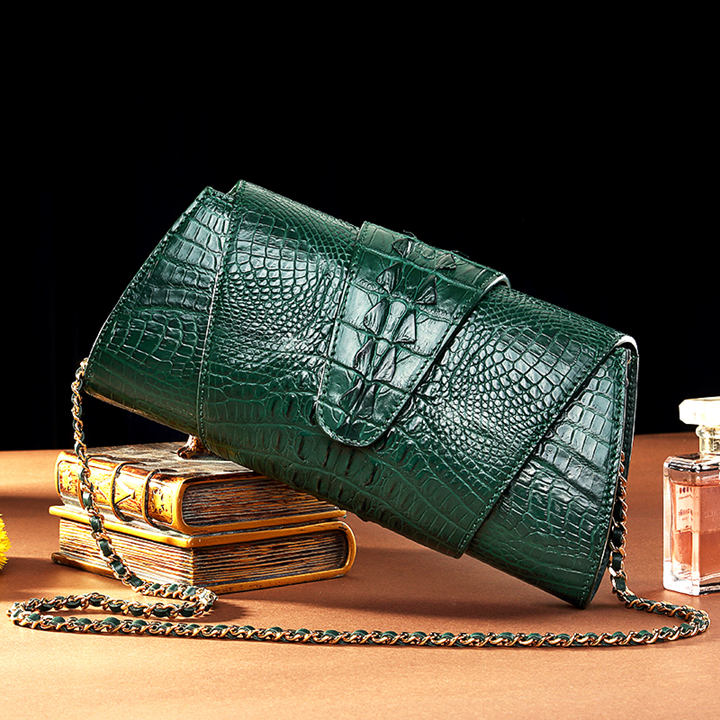
Suggested alt text: “Matte crocodile leather handbag detail in a neutral vanille tone, 2026.”]
Since 2021, Sotheby’s has sold close to $50 million worth of Hermès crocodile and alligator handbags. That number alone confirms exotic skins never left the top of the luxury market. What’s changed is which exotics are winning: auction data from 2024 through 2025 shows neutral, matte crocodile Birkins consistently outperforming their shiny, brightly colored counterparts, a shift specialists read as collectors favoring subtlety over spectacle.
It’s a trend with an unusually direct line back to Africa — not just as a market for the finished bag, but as the source of the material itself.
Where the skin actually comes from
Nile crocodile farms across Zimbabwe, Kenya, South Africa and Zambia supply a meaningful share of the exotic leather that ends up on the shelves of Hermès, Gucci, Prada and Louis Vuitton. Zimbabwe’s Padenga Holdings, one of the country’s largest crocodile enterprises, has shipped tens of thousands of skins a year to French tanneries supplying Hermès for its Birkin and Kelly lines, at export prices reported around $450 per skin — a single Birkin or Kelly typically requires two to three skins before it ever reaches a boutique priced at $40,000 or more.
In Kenya, the industry has an unusual conservation backstory. Crocodile farming there is concentrated around the Lake Victoria basin and is regulated under the Wildlife Conservation and Management Act. In Tana River County specifically, a 1997 program replaced the poisoning of wild crocodiles — once seen purely as dangerous predators — with regulated egg collection for farming, an approach a United Nations-linked report later credited with helping stabilize local crocodile populations rather than depleting them, alongside a similar recovery documented in Zimbabwe’s Zambezi valley.
That legal, CITES-regulated framework is the reason the material can move at all: every crocodile skin crossing an international border is required to carry export documentation tracing it to a certified farm, and buyers of finished exotic-leather goods are increasingly expected to be able to produce that chain themselves if asked.
Why matte is beating shiny
The stylistic shift matters as much as the sourcing story. A genuine crocodile piece has always sat apart from ordinary leather goods on rarity and craftsmanship alone, and top fashion houses have moved to lock down private hide suppliers to secure their pipelines. But where a shiny, high-gloss crocodile bag once signaled the loudest possible statement in a room, 2026’s buyers are choosing the opposite: soft, neutral tones like vanille and dove grey, finished matte rather than polished, so the material reads as considered rather than ostentatious.
That shift lines up with the same “quiet luxury” pivot reshaping tableware, cutlery and interiors this year — understated finishes over branding, texture over pattern, restraint over display. For handbags specifically, that has meant a broader move toward exotic and exotic-embossed textures in earthy, muted palettes, alongside a documented pullback from logo-forward design across the category.
What East Africa’s buyers are actually choosing
For collectors and stylists working across Nairobi, Kigali and Kampala, the practical read of this shift is straightforward: a single, well-documented exotic piece in a neutral tone is doing more status work in 2026 than a shelf of branded, patterned bags did five years ago. Genuine crocodile and alligator remain the top tier for those buying with resale and inheritance in mind — the material doesn’t just hold its value, well-kept pieces develop a patina that specifically increases desirability with age. For those unwilling to take on the price or the sourcing questions, high-quality croco-embossed leather, made from ordinary cowhide stamped with a crocodile-scale pattern under heat and pressure, has emerged as a credible, CITES-free alternative that is increasingly treated as a legitimate texture choice rather than a compromise.
Either way, the underlying instinct is the same one now showing up at the dinner table and in the villa: buy the piece that will still mean something — and still be worth something — in twenty years, not the one that photographs best this season.
View Women’s Bags
Sources
- Sotheby’s, “Guide to Buying Hermès Crocodile and Alligator Bags,” 2026.
- Earth Island Journal, “Zimbabwe’s Crocodile Factory Farms Under Fire,” 2024.
- Kenya Wildlife Safaris, “Nile Crocodile Breeding in the Farm,” 2026.
- APLF Limited, citing a United Nations CITES trade report on Nile crocodile conservation outcomes in Zimbabwe and Kenya, 2022.
- Romestation, “Exotic Leather Laws by Region: What’s Legal to Buy, Sell, or Ship in 2025,” 2026.
- Panam Leathers, “South African Farms Aim for Bigger, Better Crocodile Skin.”
- The Stylgem, “Luxury Handbag Trends 2026,” 2026.
- Leeline Bags, “What is Crocodile Leather: Properties, How It’s Made and Where?” 2025.